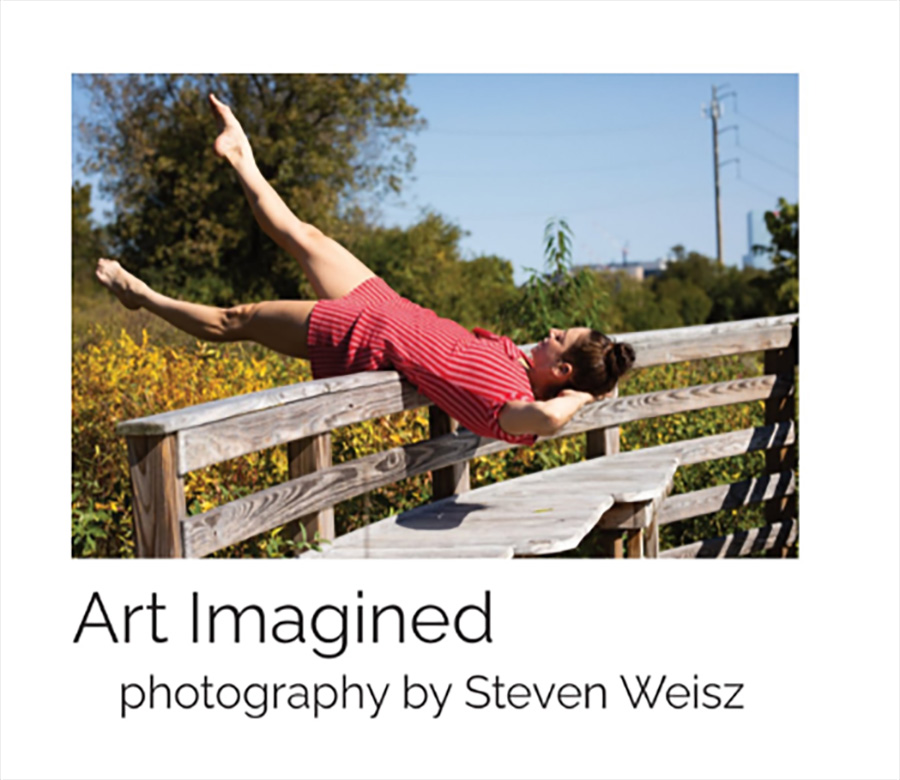
Can Art From Lansdowne, Cross a Border Politics Is Pulling Apart?
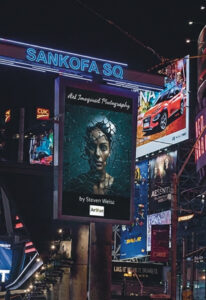
On Friday and Saturday evenings, photographs created in Lansdowne are appearing on towering digital screens in the center of Toronto.
The work of Lansdowne photographer Steven Weisz, founder of Art Imagined Photography, made its Canadian debut Aug. 21 at Sankofa Square, one of Toronto’s busiest public gathering places. The exhibition continues from 8 to 10 p.m. on weekend evenings through Sept. 12 as part of an Art In Public Spaces initiative.
Under ordinary circumstances, the exhibition would be a straightforward local success story: a photographer from a small Pennsylvania borough having his work presented internationally in the heart of Canada’s largest city.
These are not ordinary circumstances.
As Weisz’s photographs crossed the border, relations between the United States and Canada were deteriorating rapidly. The United States has imposed 50 percent tariffs on approximately $20 billion in Canadian goods following the collapse of trade negotiations. Canada has announced retaliatory measures scheduled to begin Sept. 8.
The dispute affects industries ranging from steel and agriculture to electronics and household products, but its impact increasingly extends beyond economics.
Canadian Prime Minister Mark Carney has said the two countries may never return to their previous relationship. President Donald Trump has repeatedly suggested that Canada should become the 51st state and, on Aug. 27, signed an executive order directing the United States geographic naming system to refer to Lake Ontario as “Lake America.”
Canada cannot be compelled to accept the new name, nor can the rest of the world. Lake Ontario’s name predates both countries and comes from an Indigenous word commonly translated as “lake of shining waters.” The Seneca Nation has called for the order to be rescinded, describing it as disrespectful to the Indigenous people whose history around the lake began long before the modern border existed.
Against that backdrop, photographs created by an American artist are being displayed openly and prominently in Toronto.
The timing was not planned. Weisz’s exhibition began before the latest tariffs took effect and before the Lake Ontario order was signed. Yet the coincidence gives the presentation a meaning it did not originally possess.
The work shown in Toronto explores the Japanese concept of MA, which considers the importance of space, distance and the intervals between people or objects. It asks viewers to notice not only what is present, but also what exists between things.
Weisz begins with an original photograph, prints it and physically cuts it into sections. He rearranges those pieces by hand and photographs the reconstructed composition. The finished work combines photography, physical collage and digital interpretation.
The process is built around separation, space and rebuilding. At this particular moment, it is difficult not to see a larger metaphor in it.
The United States and Canada remain physically close, economically interconnected and culturally familiar. Hundreds of thousands of people cross the border on an average day. Families, businesses, artists and institutions have spent generations building relationships that rarely attracted much attention because they once seemed permanent.
Now, spaces are opening between the two countries. Some are economic. Others are political or emotional.
Canadians have responded not only through government policy but also by avoiding American products, reconsidering travel and questioning whether the United States can still be regarded as a dependable partner. Those reactions may not disappear simply because political leaders eventually reach another trade agreement. Tariffs can be removed with a signature. Trust is more difficult to restore.
A photography exhibition cannot lower tariffs or settle a diplomatic dispute. But art can remind people that a country is more than its government and its latest political confrontation.
A photograph made in Lansdowne and viewed in Toronto arrives without a demand. It asks for nothing more than a moment of attention. That may seem insignificant when compared with billions of dollars in trade, but relationships between countries are sustained by more than treaties and financial agreements. They also depend on connections among ordinary people.
Artists, musicians, writers, students, educators, tourists and small businesses all participate in those exchanges. According to Weisz, “their work does not erase political disagreements, but it can prevent those disagreements from becoming the entire relationship”.
For Lansdowne, the Toronto exhibition is also evidence that creative work made in a small community can travel far beyond the place where it began. Weisz has previously exhibited internationally, but the Sankofa Square presentation places his photography directly within the daily life of another city.
People crossing the square may never know much about Lansdowne. Some may see an image for only a few seconds while meeting friends, going to dinner or heading home from work. Others may stop and look more closely.
Either encounter matters.
Weisz states, “the growing rift between the United States and Canada may be too large for art to repair, but it is not too large for art to cross. Perhaps that is the more realistic role art can play: creating a pause between accusation and retaliation and leaving some room for curiosity”.
That idea is central to MA. The space between things is not necessarily empty. Sometimes it is where a new connection becomes possible.
Toronto is not the final stop for Weisz’s work. Beginning Sept. 7, another Art In Public Spaces presentation will bring one of his photographs to Broad Street just south of City Hall in Philadelphia. The featured image is unmistakably local: a squirrel eating a cheesesteak.
Then, on Nov. 28 and 29, Weisz’s photography will appear in the ExpoMetro Art Tunnel in Florence, Italy. The immersive exhibition will transform a pedestrian tunnel near the Santa Maria Novella train station into a public gallery displaying work by artists from around the world.
From Lansdowne to Toronto, from a cheesesteak-eating squirrel in Philadelphia to an art tunnel in Florence, the settings and subjects may change, but the larger idea remains the same. Art does not have to wait inside a gallery for an audience to find it. It can appear in the middle of daily life, cross national borders and create connections that politics cannot easily control.
The Art Imagined Photography exhibition appears at Sankofa Square, Yonge and Dundas Street West, from 8 to 10 p.m. Fridays and Saturdays through Sept. 12.
BOOK US: Voice Mail: 484-469-0288 | [email protected] | Based in Lansdowne, PA
Member of The National Press Photographers Association
Copyright 2024 © All rights reserved. Images may not be used without prior permission or purchase.